
5 Ways to Handle Knee Instability Before Surgery to Help You Heal Faster
If someone has ever told you that you have a torn ACL or a meniscus injury, the pain in your body is only half of what you have to deal with. When your knee “gives way” while you’re just trying to walk across the room, it can be very frustrating. You walk differently and think too much about every step you take. The joint seems to be able to make its own choices at some point. Before surgery, doctors call this pre-surgery knee instability.
You get that “trick” feeling when the joint doesn’t work right and moves in ways you don’t expect. A lot of people think this is just because the ligament is torn, but it’s really because your brain, muscles, and joint aren’t working together like they should. You need to know what caused your knee to be unstable before the surgery. This is the first thing you need to do to get your movement back and make sure your ACL and meniscus recovery happens properly.
1. Knowing What Happens Before Surgery for Unstable Knees
The knee joint isn’t just a simple hinge; it’s a system of pulleys and anchors that work together. The ACL stops the tibia from moving too far forward. You lose “static stability” when you hurt this ligament or the meniscus.
Your knee feels like it’s “giving up” most of the time when you do simple things because your “dynamic stability” has failed. Without the mechanical anchor, the muscles have to work twice as hard to keep the joint stable. If they’re not ready, their knees will be weak every day before the surgery. The joint can’t control itself as well as it used to because it is unstable. If pre-surgery knee instability lasts for a long time and isn’t treated properly before surgery, it can make the joint hurt even more.
2. Searching for the Hard-to-Find Weak Links
Not only do Dr. Mayank Daral and other surgeons look at the MRI before surgery. They also look for other reasons why the patient’s pre-surgery knee instability is getting worse before the surgery. The torn ligament isn’t the only thing that makes the problem worse. These are known as “hidden weak links”:
- Weak Quads: Your brain may “turn off” your quadriceps to stop the pain in your joint. This is called muscle inhibition.
- Swelling: Extra fluid in the knee makes it more painful and interferes with the sensory receptors that send signals to your brain. A lot of this extra fluid is what makes the knee unstable before the operation.
- Neuromuscular Control: The knee could hurt at any time if the brain and muscles don’t work well together.
Taking care of these issues is important because these signals often get worse before the procedure, which means that pre-surgery knee instability episodes happen more often before surgery.
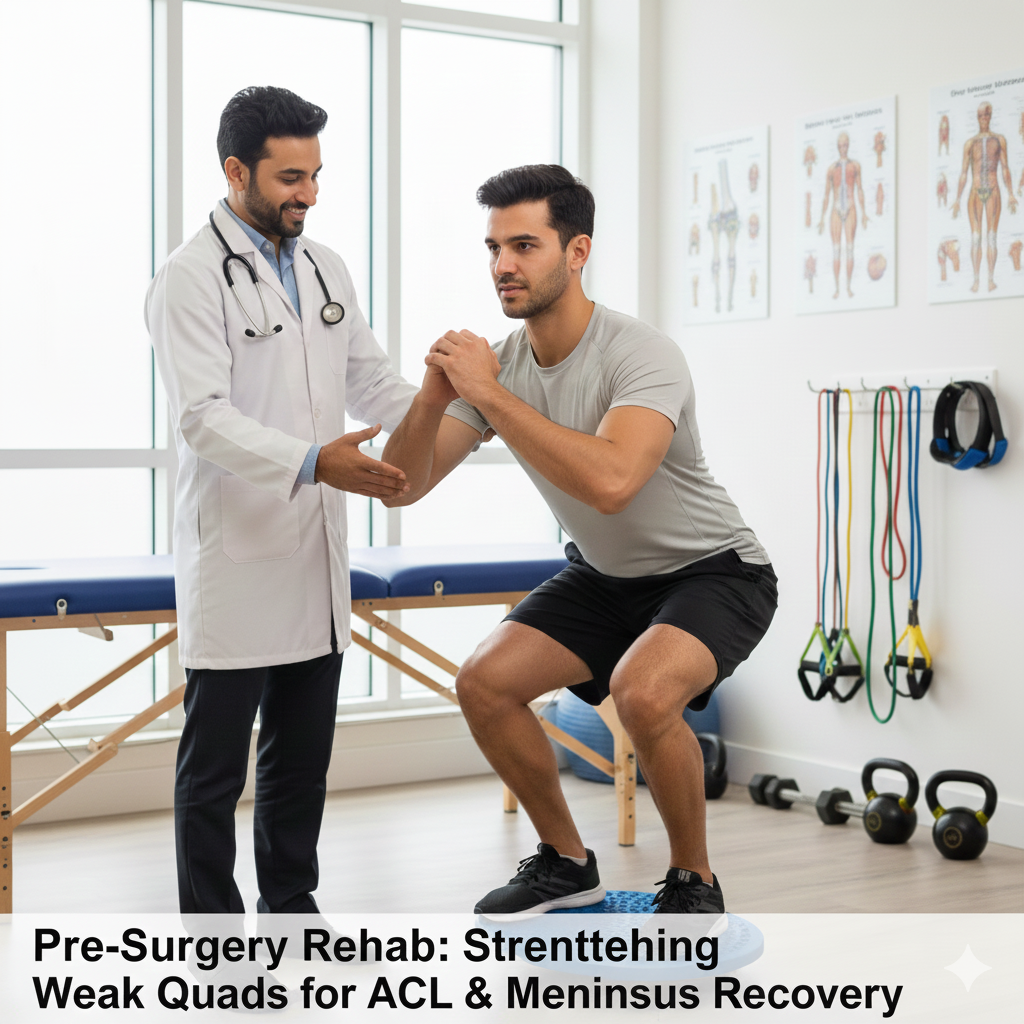
3. Strengthening Weak Quads for Surgery
Before surgery, the most important thing a patient can do is focus on strengthening weak quads for surgery. The best muscles for keeping the knee safe are the quadriceps. The knee joint has to take all the stress of each step if the quad isn’t supported. This makes the knee less stable and makes it unstable before surgery.
Your muscles will be ready to support the new graft right after the repair is done if you pay attention to this “Pre-hab” phase. To fully heal from an ACL and meniscus injury, your muscles need to be strong. Before your surgery, you can do exercises that will make your knee more stable. This will help the surgery go better. If you stop your muscles from getting weak now, you won’t need crutches as much later.
4. Don’t do things every day that make you feel shaky
Even small movements can make you fall if your knees aren’t stable. Things that used to be automatic now seem like they could hurt you. Patients should be aware of these common reasons why knees can become unstable before surgery:
- Quick Turning: Moving your body while keeping your foot still.
- Stepping off a Curb: A sudden change in height can hurt you when you get off a curb.
- Quick Direction Changes: Any movement from side to side that the damaged ligament can’t hold onto.
You can lessen the daily effects of pre-surgery knee instability by staying away from these things. You can move more slowly if you know what makes you angry. If you do this, your knee is less likely to give out. You should be careful and do some things at home to help with your pre-surgery knee instability before the surgery.
5. Making a plan for ACL and Meniscus Recovery
Orthopaedics today say that the healing process for ACL and meniscus injuries starts long before you have surgery. Surgeons don’t just look at the tear; they also think about how the injury will change how the body works. Before the surgery, doctors check to see if they know how unstable the knee is by looking at:
- Laxity: The amount of movement the joint can make.
- Joint Glide: When the bones move smoothly or change direction quickly.
- Gait and Swelling: Your balance can change based on how you walk and how swollen you are.
All of these clinical results help make sure that the surgery goes as well as possible. Your surgical team can fix your pre-surgery knee instability by keeping track of how unstable it was. This will make sure that your knee does what you want it to do. Every step you take to make your knee less unstable before surgery is an investment in your future ability to move.
Conclusion: Getting Your Balance Back
It can be annoying when your knee feels like it’s giving up on you, but pre-surgery knee instability is a sign that can be fixed. You can help your ACL and meniscus recovery before surgery by strengthening weak quads for surgery and figuring out what hurts them every day. Taking care of your pre-surgery knee instability is the best way to make sure you reach your recovery goals on time.
The surgery will fix the structure of your knee, but how quickly you can get back to doing the things you love depends on how much work you do now. Take charge of your recovery now and don’t let your knee trick you. Make sure it doesn’t get worse before surgery.