Things to Know About SLAP Tear in Young Athletes
Early recognition of a SLAP tear in young athletes helps prevent worsening shoulder damage.
SLAP tear in young athletes is often misunderstood, which is why early awareness and proper evaluation are so important.
More and more young athletes are getting SLAP tears because kids and teens are starting to play sports competitively at a younger age than they used to. A lot of the time, people say that shoulder pain in young people is just from using the muscles too much or straining them and don’t do anything about it. Sometimes that’s true, but most of the time the real problem is a lot worse. One of these injuries is a SLAP tear.
If this kind of shoulder labrum injury isn’t found and treated correctly, it could hurt an athlete’s performance in sports, their confidence, and the health of their shoulder joint in the long run. Athletes, parents, and coaches can make better choices and lower the risk of long-term problems if they know why these injuries happen, how they show up, and what treatments are available.
What does it mean to tear the SLAP?
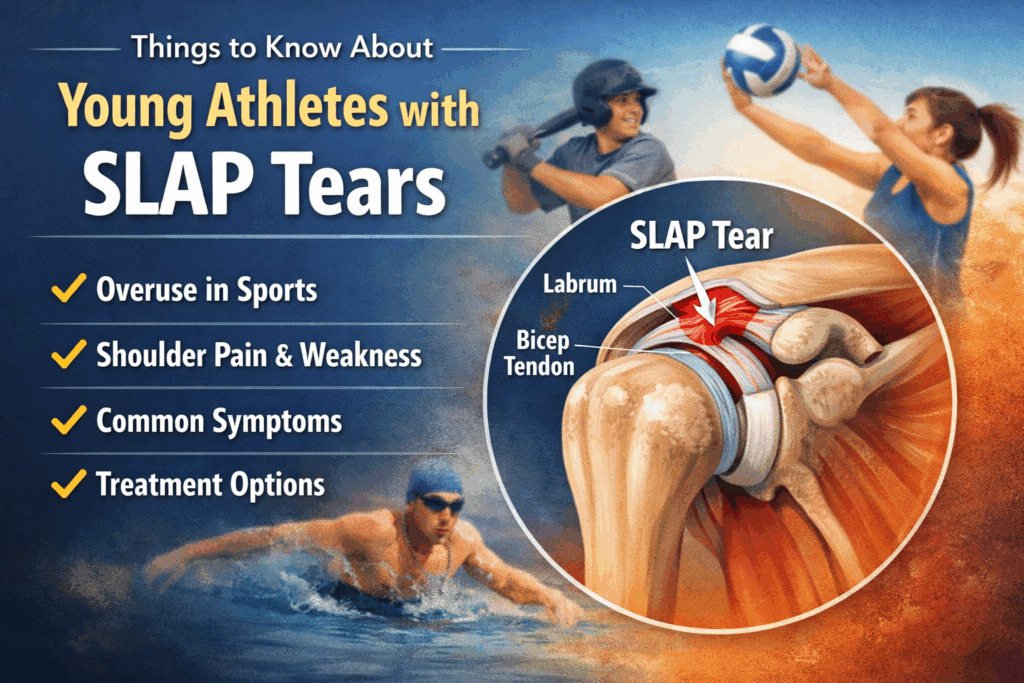
Understanding a SLAP tear in young athletes helps parents and coaches recognize when shoulder pain is more than simple overuse. SLAP stands for “Superior Labrum Anterior to Posterior.” The labrum is a ring of cartilage that goes all the way around the shoulder joint. It is very important for keeping the joint still. The top part of this cartilage, where the biceps tendon meets the shoulder, gets hurt. This is a tear in the SLAP.
The shoulder of a young athlete is still getting bigger. When you throw, serve, or swim a lot, the labrum gets more stress. It might be harder for kids to deal with a hurt shoulder labrum than it is for adults. This is because the body is still growing when the injury happens.Dr. Mayank Daral is an Olympic-certified orthopaedic surgeon who fixes knee injuries and helps people get back to their normal lives after sports injuries. He is committed to using evidence-based care and knee pain exercises to help patients of all levels get back to their best.
What makes it more likely for young athletes to get hurt?
Repetitive overhead sports are a major cause of SLAP tear in young athletes during growth years.
A SLAP tear in young athletes is commonly linked to repetitive overhead movements and year-round sports training.
Many young athletes play more than one sport and train all year with very few breaks. Bowling in cricket, pitching in baseball, swimming, tennis, and volleyball are all sports that can hurt your shoulder joint. This constant stress can lead to a SLAP tear over time.
Things get even more dangerous when kids grow up quickly. Your bones might not be able to keep up with your muscles and tendons as quickly as they grow. This imbalance puts more stress on the labrum, which can make shoulder pain worse over time, especially if you keep working out hard.
Don’t ignore these signs and symptoms
Ongoing pain may point toward a SLAP tear in young athletes rather than simple overuse.
These warning signs may indicate a SLAP tear in young athletes rather than routine muscle soreness.
There are many different types of SLAP tears. Some young athletes keep playing even when they don’t feel well, but others show signs that they are getting worse. Be on the lookout for these things:
- Shoulder pain that doesn’t go away before, during, or after playing sports
- Pain in the shoulder that feels like it’s clicking, popping, or getting stuck
- Weaker when you hit or throw
- Feeling weak or tired in the shoulders
- Moving things over your head hurts
Don’t ignore it if your shoulder hurts from sports and doesn’t go away after resting. Early evaluation is very important to stop more damage from happening.
Tears in the SLAP that stay the same and those that change
Finding out if the tear is stable or not is one of the most important things to do when treating a shoulder labrum injury. Stable SLAP tears might not make your shoulder work much worse, and in some cases, you can fix them without having to have surgery.
Unstable tears, on the other hand, make it hard for the shoulder to move normally. These injuries usually hurt, make you weak, and make you not play sports as well. If doctors find instability early on, they can choose the best way to treat young athletes.
How to Tell If You Have a SLAP Tear
In most cases, a full clinical exam and imaging tests like an MRI are needed to tell if someone has a SLAP tear. Doctors check the shoulder’s range of motion, stability, and what the athlete needs for their sport.
You can’t just look at the photos. The severity of the injury and the best way to treat it depend on the person’s symptoms, the results of the physical exam, and how active they are.
How to help young athletes
Management of a SLAP tear in young athletes should always be individualized.
Treatment for a SLAP tear in young athletes depends on shoulder stability, symptoms, and sports demands.
The sport they play, how bad the tear is, and how stable their shoulder is all affect how to treat the athlete.
Management Without Surgery
Many injuries to the shoulder labrum heal on their own. This method could include:
- Changing the rules of sports
- Physical therapy to make the shoulder stronger
- Making the rotator cuff and scapula muscles stronger
This method usually works for mild shoulder pain from sports and SLAP tears that aren’t getting worse.
w to take care of yourself after surgery
If the symptoms don’t go away after proper rehabilitation or if the tear is clearly unstable, surgery might be an option. The goal is to keep the joint from getting bigger and to get the shoulder moving again.
Doctors carefully check the growth plates and long-term health of young athletes’ shoulders before suggesting surgery.
Playing sports again without getting hurt
A structured plan is essential when recovering from a SLAP tear in young athletes.
The main goal of treatment is to make sure you can safely play sports again. You could hurt yourself again and have shoulder problems for a long time if you go back too soon.
Here are some things you can do to stay out of trouble:
- The best way to warm up and cool down
- Not doing a lot of extra work on top of other work all year
- Getting stronger and more flexible through training
- Being careful with sore shoulders
If young athletes pay attention to their bodies and make recovery their top priority, they can avoid SLAP tears.
Why you should pay attention right away
If you don’t do anything about your shoulder pain, it could get worse and make it harder for you to work and play sports again. If you get the right diagnosis and treatment early on, things will be very different.
You don’t have to be weak if your shoulder hurts all the time. This means that something is wrong. Fixing the problem early is good for your short-term athletic performance and your long-term joint health.
sports shoulder pain
is often an early warning sign of underlying injuries and should not be ignored, especially in young athletes involved in repetitive overhead activities.
Last Words
With timely care, a SLAP tear in young athletes can heal successfully.With proper care, a SLAP tear in young athletes can heal well, allowing a safe and confident return to sports.A young athlete with a SLAP tear needs to get it treated right away because it is a serious injury that can be fixed. If young athletes get the right evaluation, treatment, and plan for getting back into sports, they can usually fully recover and keep playing the sports they love.
You can keep your shoulders healthy for a long time if you know the risks and pay attention to early warning signs.
Dr. Mayank Daral is an Olympic-certified orthopaedic surgeon
FAQS
What does it mean to have a SLAP tear?
A SLAP tear hurts the shoulder labrum, which is the cartilage that keeps the shoulder joint from moving too much. This happens at the top of the socket where the biceps tendon connects.
Why do young athletes get SLAP tears more often?
Young athletes often play more than one sport and do the same overhead movements over and over. This puts more strain on the shoulder and makes it more likely that you will get hurt.
What are the signs and symptoms of a tear in the SLAP?
Some common signs are pain in the shoulder, clicking or popping sounds, less strength when throwing or hitting, tiredness, and pain when doing things that require lifting things above your head.
Can a SLAP tear heal on its own?
Yes. Rest, physical therapy, and exercises that build strength can help with many SLAP tears, especially those that are stable. Surgery is only an option if the symptoms don’t go away or the tear is unstable.
When can a young athlete start playing sports again after a SLAP tear?
Your shoulder’s healing, strength, and stability will determine when you can get back to sports. You need a structured rehabilitation program and a doctor’s permission to come back safely.